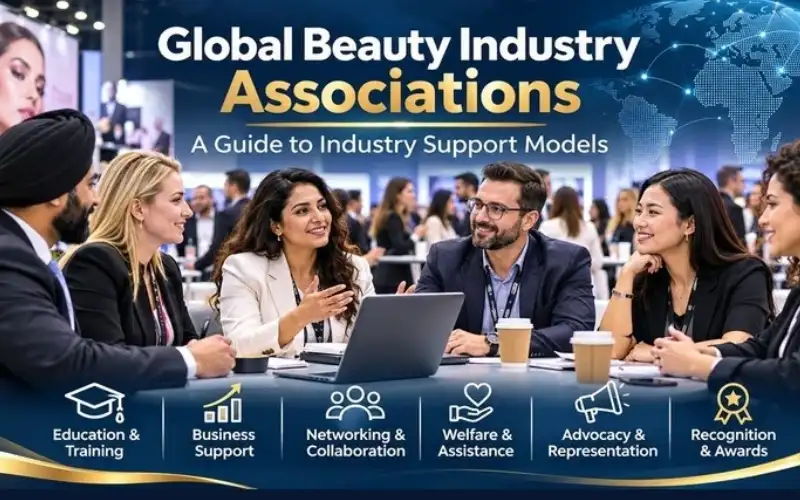
Global Beauty Industry Associations: A Guide to Industry Support Models
The beauty industry brings together salon owners, hairstylists, makeup artists, beauty therapists, nail professionals, educators, academies, students, brands and independent beauty businesses. Across different countries, organisations work in different ways to support this professional community.
Some focus on education and professional development, while others provide business resources, networking, advocacy, welfare initiatives, professional recognition or digital services.
This guide introduces selected beauty industry organisations and explains the different ways they support beauty professionals and businesses. It also explores how industry associations can contribute to professional development, business growth, community support and the future of the beauty industry.
This is an informational guide, not a ranking, endorsement or criticism of any organisation. The organisations included are examples of different approaches to industry support.
What Are Beauty Industry Associations?
Beauty industry associations are organisations, professional networks or membership-based groups that work to connect, support, represent or develop people and businesses within the beauty sector.
Depending on their objectives, they may work with:
- Salon owners and salon businesses
- Hairstylists and hair professionals
- Makeup artists
- Beauty therapists and skincare professionals
- Nail professionals
- Beauty academies and educators
- Beauty students
- Spa and wellness businesses
- Beauty brands and suppliers
Their activities may include professional education, networking, business resources, welfare programmes, advocacy, events, recognition and other industry-related initiatives.
Not every association provides the same services. Each organisation operates according to its own objectives, structure, geographical reach and professional community.
How Beauty Industry Associations Support Professionals
Education and Professional Development
Education is an important part of the beauty industry. Associations may organise workshops, webinars, conferences, competitions, training programmes and educational resources to help professionals develop their skills and knowledge.
Business Support
Salon owners manage customers, staff, bookings, marketing, pricing, hygiene, business operations and customer relationships. Some associations provide business resources, educational materials, professional guidance and networking opportunities.
Professional Networking
Industry events, professional communities and membership networks can connect beauty professionals with colleagues, educators, suppliers and other businesses. These connections may create opportunities for collaboration and professional development.
Advocacy and Industry Representation
Some organisations engage in advocacy, industry representation, policy discussions or regulatory-related initiatives. Their activities depend on the laws, licensing systems and professional structures of the countries in which they operate.
Welfare and Community Support
Certain associations and foundations provide charitable assistance, emergency support, scholarships, educational opportunities or other welfare-related initiatives for professionals and their communities.
Professional Recognition
Organisations may offer awards, competitions, membership credentials, directories, professional recognition programmes or other initiatives designed to highlight achievements and professional participation.
These support activities are found across different organisations, although the programmes and responsibilities vary.
Selected Beauty Industry Organisations Around the World
The following organisations provide examples of different approaches to professional beauty industry support. They are included for informational purposes and are not arranged according to size, influence, performance or ranking.
1. Professional Beauty Association (PBA) – United States
The Professional Beauty Association serves a broad professional beauty community, including licensed professionals, salon and spa owners, students, businesses and industry partners.
Its publicly available initiatives include education, advocacy, professional networking, industry recognition and charitable support.
PBA programmes include initiatives such as NAHA, the Beacon Student Program, Future Leaders, Executive Summit and Disaster Relief Fund.
Official website: https://www.probeauty.org/
2. American Beauty Professionals Association (ABPA) – United States
The American Beauty Professionals Association describes itself as a membership organisation serving professionals across beauty and wellness fields, including hair care, skincare, aesthetics, nail care, spa therapy, massage and related professions.
Its publicly described approach includes professional communities, business resources, educational opportunities, advocacy, networking and membership-related benefits.
Official website: https://beautyprofessionalsassociation.org/
3. International Beauty Industry Association (IBIA)
The International Beauty Industry Association describes its work around professional assessment, recognition, accreditation and the evaluation of specialists, salons, schools and academies within the beauty industry.
Its publicly available information includes professional registers, assessment-related programmes and professional recognition initiatives.
Official website: https://ibia-beauty.com/
4. International Beauty Professionals Association (IBPA)
The International Beauty Professionals Association describes itself as an international professional community for beauty specialists, educators, salon owners, business owners and brands.
Its publicly described areas include education, professional standards, networking, recognition, professional resources and industry events.
Official website: https://www.ibpassociations.org/
5. Beauty Professionals Association (BPRO) – India
The Beauty Professionals Association (BPRO) presents initiatives related to beauty education, academies, certification, professional development, masterclasses, competitions, industry events and professional recognition.
Its publicly available programmes and services cover various participants within the beauty industry, including professionals, educational institutions, salons, spas and industry businesses.
Official website: https://beautyproassociation.org/
6. SOWA International – Salon Owners Welfare Association (India)
SOWA International, the Salon Owners Welfare Association, is an India-based organisation working towards the support, professional development, business visibility and digital participation of salon owners, beauty professionals, academies and beauty students.
Its initiatives include membership-related services, salon identity initiatives, business profiles, online verification-related services, educational support, certificates, professional recognition, networking activities and digital services designed for beauty businesses and professionals.
SOWA International’s approach includes connecting professional identity, business visibility, verification-related initiatives, education-related support and digital participation within a connected platform ecosystem.
Its publicly presented initiatives include:
These initiatives represent SOWA International’s approach to connecting beauty professionals, supporting businesses and encouraging digital participation within the beauty industry.
Official website: https://sowainternational.com/
The organisations listed above illustrate that beauty industry support can take many forms. Their services, structures and objectives differ, and each organisation should be understood according to its own publicly documented work.
Different Models of Beauty Industry Support : Global Beauty Industry Associations
Beauty industry organisations may work through one or more of the following models.
Professional Membership Model
This model connects professionals through membership, community, networking, resources and industry participation.
Education and Training Model
Organisations may focus on workshops, qualifications, professional development, competitions, masterclasses, educational resources or training programmes.
Advocacy and Representation Model
This approach may involve professional representation, policy engagement, regulatory awareness, industry advocacy or communication with relevant stakeholders.
Business Development Model
Some organisations provide business resources, networking, marketing support, operational guidance, business tools or opportunities to connect with other professionals.
Recognition and Assessment Model
This model may involve professional assessments, awards, recognition programmes, directories, accreditation-related initiatives or competitions.
Welfare and Community Support Model
Organisations may support professionals through charitable assistance, scholarships, emergency help, community initiatives or educational opportunities.
Different associations may combine several of these models depending on their mission, resources and organisational structure.
The Role of a Beauty Industry Advisory Council
A Beauty Industry Advisory Council can be a mechanism for encouraging industry consultation, professional perspectives, guidance and participation.
Depending on its officially defined responsibilities, an advisory council may help an organisation:
- Gather industry perspectives.
- Discuss challenges faced by beauty professionals.
- Provide recommendations on programmes and initiatives.
- Encourage professional dialogue.
- Support future planning.
- Identify industry development opportunities.
- Encourage participation from different professional backgrounds.
An advisory council’s responsibilities depend on its constitution, mandate, membership, structure and actual activities.
The presence of an advisory council alone does not establish regulatory authority, government recognition or independent accreditation. Its role should be described according to documented responsibilities and activities.
The Future of Beauty Industry Support
The beauty industry continues to evolve through technology, digital platforms, changing customer expectations, education, business development and professional networking.
Industry organisations may increasingly explore:
- Digital professional profiles.
- Online verification systems.
- Accessible educational resources.
- Business visibility and digital marketing.
- Professional communities.
- Industry networking.
- Career development opportunities.
- Digital business tools.
- Welfare and community programmes.
- Cross-border professional collaboration.
Different organisations may contribute to these developments through different approaches. Collaboration, knowledge sharing and accessible professional resources can create opportunities for the industry to evolve.
No single model is suitable for every professional or business. The value of an organisation depends on its objectives, services, accessibility, transparency, relevance and the actual support it provides to its community.
Frequently Asked Questions : Global Beauty Industry Associations
What is a beauty industry association?
A beauty industry association is an organisation or professional network that supports, connects, represents or develops people and businesses working in the beauty industry through activities such as education, networking, business resources, advocacy, recognition or welfare initiatives.
What do beauty associations do for salon owners?
Depending on the organisation, salon owners may receive access to business resources, professional networking, educational opportunities, industry events, recognition programmes, community support or other membership-related services.
Are beauty industry associations the same as government licensing authorities?
No. Professional associations and government licensing authorities are different types of organisations. Association membership, certificates, verification or recognition programmes do not automatically replace government-issued licences, legal registrations or statutory qualifications.
Do beauty associations support beauty students?
Some associations provide student memberships, educational resources, competitions, scholarships, training opportunities, professional networking or career-related initiatives. The availability of these programmes varies by organisation.
What is a Beauty Industry Advisory Council?
A Beauty Industry Advisory Council is a group or advisory structure that may provide industry perspectives, recommendations or guidance to an organisation. Its role depends on its officially defined responsibilities and activities.
How can salon owners find an organisation that supports them?
Salon owners can review an organisation’s official website, services, membership requirements, published activities, transparency, educational opportunities, support programmes and relevance to their business needs before joining.
What is SOWA International?
SOWA International, the Salon Owners Welfare Association, is an India-based organisation with initiatives related to salon owners, beauty professionals, academies, students, professional identity, digital visibility, verification-related services, educational support and industry development.
Official website: https://sowainternational.com/
Explore Beauty Industry Support Initiatives
Beauty industry organisations work through different approaches to professional development, business support, education, networking, welfare, advocacy and recognition.
Professionals and salon owners can explore the services offered by different organisations and choose resources that are relevant to their professional and business requirements.
To explore SOWA International’s initiatives for salon owners, beauty professionals, academies and students, visit:
https://sowainternational.com/
Editorial Note: This article is “Global Beauty Industry Associations” an informational overview of selected beauty industry organisations and their publicly available initiatives. It is not an official ranking, endorsement or criticism of any organisation. Information about individual organisations is based on publicly available sources and may change over time. Organisations are included to help readers understand different approaches to professional support, education, welfare, networking and industry development.